Skip to menu
Skip to content
Yau Law
Focused on Protecting Businesses and Representing the Injured

Jo-Anne Yau Presents ‘Body Guard Licensing Requirements’ for Private Investigators

What does it take to become a body guard in Florida?  Recently, Jo-Anne Yau answered this question and many more at the Jacksonville (Area 12) PI Meeting for the Florida Association of Private Investigators.  The topic of the FALI meeting, run by President Josh Askew, was executive protection.  Ms. Yau presented with Sam Rodriguez, who is with the Jacksonville Sheriff’s Office, about what it takes to become a security officer in Florida.  While Mr. Rodriguez addressed the physical demands of being a body guard and taught basic self defense techniques, Ms. Yau discussed the legal requirements.

Ms. Yau’s presentation centered around the various licensing procedures involved in the security industry.  Like many other professions where a great deal of trust is placed in the hands of practitioners, the private security industry is regulated by the State of Florida.  Body guards are required to be licensed by the Department of Agriculture and Consumer Services, Division of Licensing, which also establishes the rules of conduct to be followed by all security personnel.

Licensing protects the public and provides a means for citizens to keep track of complaints against individuals who are unethical or incompetent.  Licensed professionals, therefore, must be accountable.  Requiring security personnel to be licensed ensures a certain level of training is met.  For example, to be employed as a security officer, an individual must obtain a Class D license, which requires 40 hours of training at an approved training facility.  An additional license and training are needed to carry a firearm.

Licensed security professionals, including body guards, must follow the rules regulating the industry.  For example, a security officer is required to wear a uniform while on duty.  The uniform should meet specific guidelines, like having a patch identifying the employment agency.  Only during certain circumstances, such as special assignments, may a security officer be on duty and out of uniform.

Are you having issues obtaining a professional license?  The Yau Law Firm may be able to help.

NFL: Owners and Players Settle on a New Collective Bargaining Agreement

After months of intense negotiating, the NFL Lockout came to a close late this July.  Team owners unanimously voted, with the Oakland Raiders abstaining, to ratify the National Football League Players Association’s (NFLPAlatest collective bargaining agreement (CBA) proposal.

This ended an impasse that had officially begun on March 12, 2011, just weeks after the previous collective bargaining agreement expired.  In a collective bargaining situation, an employer uses a lockout just as employees use strikes.  During a lockout, owners prevent players from practicing and playing in order to coerce players to agree to certain employment terms.  Similarly, during a strike, players refuse to work in order to force owners to agree to their terms.

Throughout its history, the NFLPA has played different roles in player advocacy.  At times, the NFLPA acted as a professional association and promoted free agency among players.  During other times and recently, players authorized the NFLPA to act as a union and bargain on their behalf.  Notably, the NFLPA has engaged in several strikes since its creation in 1956.

The current CBA is a 10 year deal and involves notable changes in how the league operates.  First of all, a wage scale will limit pay for newly signed rookies, which should effectively reduce the length of their initial contracts.  Many players welcome this and feel that more experienced players should be making the big bucks, not the incoming rookies.  Also, there will be fewer mandatory workouts and practices during the football season.  Less training is expected to result in a lower number of injuries.

Some of the final items agreed upon were guidelines for on-field misconduct.  Under the new CBA, players seem to have greater protection when it comes to penalties and fines.  Now, the league must bring issues before the NFLPA before suspending players or fining them over $50,000.  Players also have the right to appeal a fine that is greater than a certain percentage of their salary.  Finally, the CBA provides for the possibility of human growth hormone testing in players so long as the union agrees to an acceptable method of testing.  Human growth hormone testing has been a controversial issue in professional sports, so whether the two sides will ever reach an agreement on the issue is up in the air.  One thing is for certain though: football is back – at least for the next 10 years.  

The Yau Law Firm now has a licensed sports agent and Sports Law attorney to represent athletes considering a move to the pros.  If you’re thinking about a career in professional sports, it is important to consult with an athletic agent before signing with a team.

French Fry Heaven: The Next Big Deal in Fast Food

  Jacksonville is becoming a larger pin on the Florida map.  Local outdoor apparel and equipment company, IRISHWATERDOGS, with their charitable and patriotic efforts toward the Wounded Warriors Project, will be NBC Sports’ and VS. Channel’s poster child they reflect on the 10th anniversary of Sept. 11.  The Jacksonville Sharks have just celebrated their “Superbowl of Arena Football.”  And now, Jacksonville’s upscale shopping and dining center, the St. Johns Town Center, is preparing for the next big deal that will be putting Florida’s First Coast on the forefront of attractions:  French Fry Heaven.

There’s nothing new about french fries.  But Scott Nelowet puts an entirely new spin on a national favorite, the inspiration coming from unique ways that fries are enjoyed around the world.

It’s a wonder why “Creativity” isn’t Nelowet’s middle name.  He’s a serial entrepreneur whose resume includes MTV in Manhattan and President of a university with campuses across the country.  “Angels” and “Saints” are the brainchildren of Nelowet’s innovative streak, featuring traditional russet potato fries or sweet potato fries.  Toppings include barbecue sauce, curry, blue cheese, and even sweet options like marshmallow or cinnamon and brown sugar.

While the menu may have diners salivating, I predict that the business-savvy will be chomping at the bit for a slice of French Fry Heaven.  While a corporate-owned business can only sustain so many locations, franchising is an avenue for entrepreneurs to be in business for themselves, but not by themselves, by purchasing an independently owned and operated location.

Take New York Fries, for instance.  Despite its ironically Canadian roots, NYF has franchise locations all over North America, in the United Arab Emirates, South Korea, and Hong Kong.  This accomplishment would be nearly impossible without a franchising structure.  Even KFC harnessed the power of its global franchises to sell variations of their spud side items, and have been wildly successful at selling their poutine fries, which, until recently, were Canada’s best kept secret.

A number of Jacksonville-based food services have experienced enormous returns from adopting a franchise structure.  Firehouse Subs is certainly on the forefront.  The Yau Law Firm has been extremely pleased to help The Metro Diner franchise their operations, and be featured on the Food Network’s “Diners, Drive-ins, and Dives.”

To follow in the footsteps of local powerhouses like The Metro Diner or to learn how enterprises like French Fry Heaven stepped up into the big leagues, contact me.  I’ll teach you how to make the most out of your concept, brand, and trademarks, help you put together a Franchise Disclosure Document, and negotiate a franchise agreement.

Katie Holmes’ Lawsuit Against Star Magazine: Defamation of a Public Figure

Actress Katie Holmes recently filed a libel lawsuit for damages of $50 million against American Media Inc., owner of Star Magazine. The complaint alleges that the tabloid printed “vicious lies” and harmful statements intended to lead readers to believe that Katie is a drug addict. The cover of the magazine’s January edition displays an unflattering photo of the actress along with the headline: “ADDICTION NIGHTMARE – Katie DRUG SHOCKER!” The articles contained in the publication however do not support the headline, according to Holmes’ legal team. Discussed instead is the actresses use of an endorphin releasing device.

Libel is a form of defamation involving printed or written materials. A successful libel cause of action requires proof of a false statement resulting in damage to the claimant’s reputation. The available remedies include monetary relief, like that sought by Holmes, or a court ordered retraction by the publisher. In Florida, the defendant can be ordered to retract a false statement if it appears to have been was published in good faith as an honest mistake. In the event of a retraction, a defendant’s liability for money damages may be reduced

When a public official or public figure sues for libel, the claimant must also prove that the publisher acted with actual malice or a knowing or reckless disregard for the truth.

Despite the initial demand letter from Holmes’ attorney requesting a retraction and a multimillion dollar federal lawsuit, AMI has stood its ground, arguing that the messages published in the January issue of Star are not false. The tabloid article involves endorphins, which “can be a natural drug.” AMI also contends that it is “not defamatory to state that a person is addicted the ‘feeling of a natural high.’” The outcome of this legal battle in the making should be interesting, as each side appears to have valid points.

Has your reputation been harmed by another person’s false statement?  Contact a civil litigation attorney today.

Recruitment Fraud: A Job Seeker’s Nightmare

A common scam, especially in this economy, is recruitment fraud. The scamming party will fraudulently pose as the agent for a legitimate business and will use fictitious offers of employment to trick jobseekers out of personal information or money.

Recruitment fraud comes in different varieties. In one method, a bogus website is created using the name a legitimate business frequented by jobseekers. When a user accesses the false website, they are prompted to submit personal information under the pretense of completing a job application.

Another method involves unsolicited emails appearing to be from legitimate recruiters. The email purports to be an employment offer and usually requests the victim to reply by sending personal data such as social security number, dates of birth, and band information. Emails sent by defrauders will also often request victims to pay money in order to cover travel or other expenses.

Several large corporations advise potential job applicants on how to identify and how to address recruitment defrauders. Job seekers are told that recruitment fraud often involves early requests for information and requests for personal information. Another red flag is emails sent from free accounts such as yahoo.com or gmail.com. It is strongly advised never to send money. Companies also advise that job offers are never made without first conducting a formal interview.

If you believe you have been contacted by a fraudulent recruiter, make sure to save all correspondence, never disclose personal information, and contact an attorney specializing in this area.

Jacksonville Asian Community Targets of Crime; Misconceptions About Criminal Defense

The Jacksonville Sheriff’s Office reported that the Asian community has been a prime target by criminals, citing the statistical data available to the public.  JSO representatives, State Attorney Angela Corey, and leaders of local Asian organizations held a community forum in early June to discuss safety.  

Law enforcement offered  advice to families and business owners  to ensure their own safety.  Suggestions included:  providing adequate lighting, keeping large amounts of cash off the premises, and getting video surveillance systems installed, which could provide valuable leads for the police to track the perpetrators, and serve as evidence for prosecutors.

The Yau Law Firm is an Asian owned business, and takes these alarming statistics very seriously.  While one of the practice areas includes Criminal Defense, a common misconception is that attorneys help criminals “get off.”  That simply is not true.  Every suspect is innocent until proven guilty, which is why evidence documenting a crime is so critical in criminal cases.  When there is evidence that proves, beyond a reasonable doubt, that a crime was committed, the suspect ought to be convicted.  Without this evidence, there is an unacceptable risk that an innocent person’s constitutional guarantee of liberty will be violated.

When someone is charged with a crime, there are some people who believe that this person “must be guilty of something.”  Law enforcement and prosecutors are human, and make human errors.  Making an error in charging or prosecuting is no exception.  The Yau Law Firm believes in minimizing the element of human error by evaluating protocol, procedures, and evidence.

From Emblems to Empires, a Franchisee’s Perspective

 Blog Talk Radio hosts, Kerry Heaps and Jo-Anne Yau featured, “From Emblems to Empires – Buying a Franchise (Part II)” on the July 1, 2011 episode of “Business Talk Radio.”  The topic was the franchisee’s perspective of the popular business model.

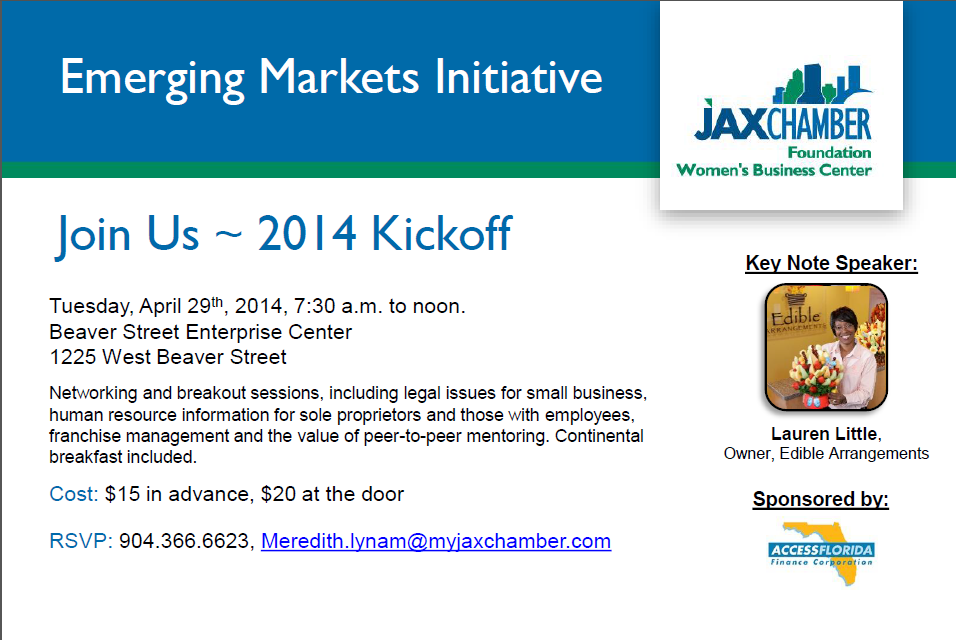
Lauren Little, an Edible Arrangements franchisee here in Jacksonville, Florida was the guest speaker.  Ms. Little has two business locations in the Avondale & Bartram Park areas of Jacksonville, FL.  She shared her experience in acquiring her first Edible Arrangements franchise, and revealed the secrets of her success, including winning the 2010 Women Business Owners’ Award for Franchisee of the Year.  Ms. Little then offered tips to prospective franchisees, and revealed the advantages and challenges of being a franchisee.

Ms. Yau then offered legal advice to prospective franchisees, shedding light on what to look for in the Franchise Disclosure Document (“FDD”).  Of note, Ms. Yau encouraged listeners to consider a number of franchise concepts, and compare the FDD items to find the right fit for the long-term relationship with the franchisor.  She also addressed terms of the Franchise Agreement, including non-compete clauses.

To learn more about business and intellectual property law, tune in online on Fridays from 10-11am EST for the live show.  You can call in to ask questions at 646-716-8610, or tweet them to @kerryheaps.  Access archived episodes to catch up or review earlier topics, including Part I of “From Emblems to Empires,” where the guest, Franchise Expert and Business Consultant Jim Cataland shared his experience and expertise with Business Talk Radio.

Jo-Anne Yau’s Woman-Owned Business Strategies Featured in Jacksonville Business Journal

More Florida women are deciding to become business owners in the face of our current economic crisis.   And their businesses are thriving.  Ask Jo-Anne Yau, who was featured in the Business Strategies section of the Jacksonville Business Journal.

Ms. Yau credited her mentors and support staff for her success in starting a law firm when the odds were against a new business.

According to the December 2010 American Express Open State of Women-Owned Business report, woman entrepreneurs in Florida have been steadily increasing in number since 2007.  Along with this growth also came increased employment opportunities.

Locally, the Jacksonville Women’s Business Center has seen an increase in clients since 2010.  The JWBC counseled 351 clients in 2010, and with the current fiscal year half way completed, they have already seen 469 clients.  The JWBC offers mentoring and training programs such as Marketing  and Financial Matters.  This is a great resource for women seeking to  start their own businesses here in Jacksonville.

Among new businesses started by women is Dixie’s Barbeque, spearheaded by Susan Lesniak.  Dixie’s is a mobile barbeque concept, making stops at venues like office parks, fairs, and shopping districts.

Duval county has a number of other resources and networking opportunities for women entrepreneurs.  The Jacksonville Regional Chamber of Commerce has the Professional Women’s Council, there is a Women Business Owners group that meets once per month, and for attorneys, there is the Jacksonville Women Lawyers’ Society.

This trend of increasing numbers of woman-owned businesses is encouraging in many respects.  Not only is it commendable to see women taking the reigns to start a venture, it sets an optimistic stage for all businesses to start up and thrive. 

To get your venture started on the right foot, talk to a business attorney about forming a corporate entity, registering your trademarks, and getting your contracts in order.

Jo-Anne Yau to Co-Host Blog Talk Radio’s Business Show

  Blogs aren’t just for reading anymore.  Starting June 3, Kerry Heaps and Jo-Anne Yau will co-host Blog Talk Radio’s “Business Talk Radio” show.  The hour-long shows will address a number of business-related topics, such as patents, franchising, licensing, litigation, and contracts.  It airs every other Friday, 10-11am EST.

The inaugural show is dedicated to trademark law.  Ms. Yau will go through trademark basics, business strategies for branding, and offer legal advice for making the most of intellectual property.

Kyle Boatwright, President of Worthington Millworks, will be Ms. Yau’s guest.  He will talk about his experience with registering his name and logo, and how registered trademarks have facilitated his business’ development.

Listeners can tune in and call with questions at 646-716-8610, or tweet questions to @kerryheaps.  The show will be archived for those who miss the live show.

Because the show is accessed online, Blog Talk Radio has listeners across the country and around the world.  If you have a topic you would like to hear, let us know.

eBay Sues Google for Stealing Executives and Trade Secrets

It’s the ultimate clash of the titans.  In a dispute over the Google Wallet payment service allegedly infringing on the trade secrets of eBay’s PayPal service, the May 27, 2011 lawsuit was filed.  The claims revolved around former eBay executives, Osama Bedier and Stephanie Tilenius revealing proprietary information to Google.

The events leading up to the dispute between the Silicon Valley giants began with what seemed like an amicable relationship.  For two years, Google negotiated with eBay to have PayPal process payments for an Android app.  Suddenly, Google cut off negotiations.

Turns out, the halt in discussions ended soon after Google hired Bedier, a nine-year PayPal executive.  Tilenius is accused of encouraging Bedier to leave PayPal.  The Complaint alleges that prior to leaving eBay, Bedier downloaded PayPal’s proprietary secrets into an Internet storage locker called DropBox.  But even without this alleged transfer of trade secret information, Bedier and other eBay executives were subject to a five year non-solicitation covenant.

Most lawsuits involving these issues do not involve corporate giants.  Employment agreements and trade secrets disputes arise in businesses of all sizes.  If you have a question about these topics, contact an attorney experienced in corporate and intellectual property litigation.

« Previous PageNext Page »